
Blog · 18 September 2026 · 3 min read
How To Read Your Tyre Size (And Why We Ask For A Photo)
205/55 R16 91V, decoded in two minutes — plus the date code that tells you how old a tyre really is.
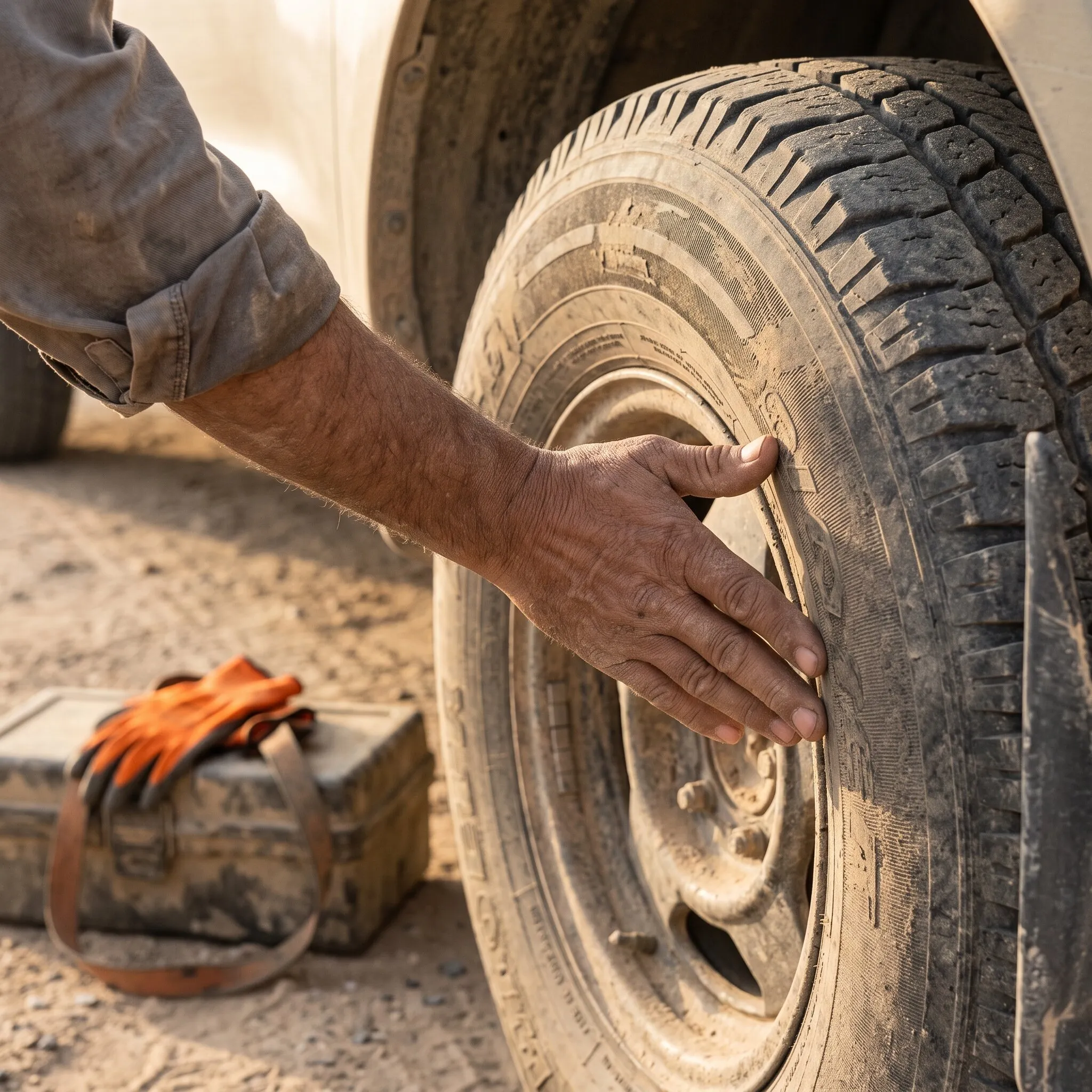
When you call us for a replacement, the first thing we ask for is the tyre size — and the easiest way to give it to us is a photo of the sidewall. Here is what the numbers mean, so you know what you are looking at.
The size, decoded
Every tyre carries a code like 205/55 R16 91V. Reading left to right:
- 205 — the width of the tyre in millimetres.
- 55 — the sidewall height as a percentage of the width. A lower number means a lower, sportier profile.
- R — radial construction, which is every normal car tyre today.
- 16 — the wheel diameter in inches. This has to match your rim exactly.
- 91 — the load index, how much weight each tyre is rated to carry. Never go below what the car came with.
- V — the speed rating. Again, match or exceed the original.
All four numbers matter, but the three that must match are width, profile and rim size. If you have a brand preference, tell us that too; if not, we bring a good match from the major brands we stock.
The date code most people never notice
Further round the sidewall there is a longer code beginning with DOT. The last four digits are the week and year the tyre was made: 2324 means the 23rd week of 2024. In Dubai's heat, tyre rubber ages faster than in cooler countries, and a tyre approaching six years old deserves a proper look even if the tread is fine. We check this on every replacement we fit and will show you the code on the new tyre.
Where the size is written for your car
Besides the tyre itself, the recommended size and pressures are printed on a sticker inside the driver's door jamb, and sometimes inside the fuel flap. That sticker is the reference for what the car should be running, which is useful if a previous owner fitted something unusual.
Why we ask for the photo: a picture of the sidewall gives us the size, the brand currently fitted and the date code in one go, and it avoids the most common mistake — reading the profile and rim size the wrong way round. Send it on WhatsApp with your location and we can usually quote before we leave.
Do the front and rear have to match?
On most cars, yes. Some cars run a wider size on the rear axle; the door sticker will say so. Within an axle, both tyres should always be the same size and, ideally, the same brand and pattern — mismatched tyres on one axle affect braking and stability, especially in the rain we do occasionally get.