
Blog · 18 September 2026 · 3 min read
Tyre Pressure In A Dubai Summer: The Numbers That Matter
Why the pressure on the door sticker is a cold number, what 45-degree tarmac does to it, and the one thing not to do at a petrol station.
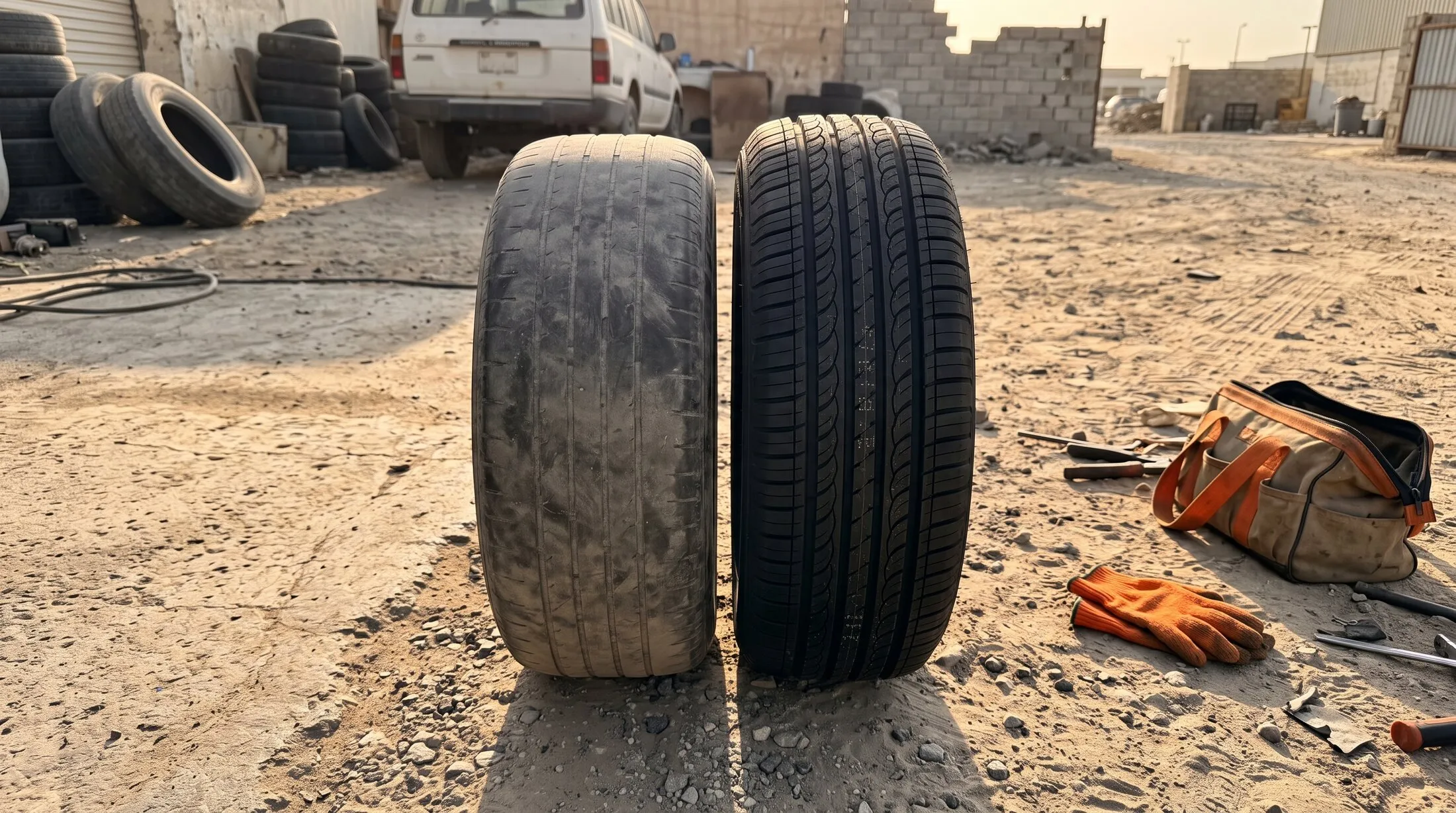
Most of the blown-out tyres we see in July and August share one cause: they were running under-inflated on tarmac hot enough to cook on. Pressure is the cheapest thing you can get right about your tyres, and in a Dubai summer it is also the most important. Here is what the numbers mean.
The sticker number is a cold number
The recommended pressure on the sticker inside the driver's door jamb — typically somewhere between 32 and 38 psi for a car or SUV — is a cold pressure: the tyre has not been driven for a few hours. That is the only pressure worth comparing against. Check in the morning before the first drive, or after the car has sat in the shade for a few hours.
Heat pushes the reading up
Driving warms the tyre and the air inside it, and a tyre that read 34 psi cold can read 38 or 40 psi after half an hour on Sheikh Zayed Road in August. That is normal. It is also why the single worst thing you can do at a petrol station on a hot afternoon is let air out of a hot tyre to bring it "back to" the sticker number: when it cools, it is now under-inflated, and under-inflation is what kills tyres in the heat.
Why under-inflation matters more here
A soft tyre flexes more with every rotation, and flexing generates heat. On 45-degree tarmac the tyre is already starting hot; add the extra heat from running soft and the rubber and the structure inside it break down. That is the blow-out you see on the shoulder of the motorway every summer. A few psi low, every day, for months, is how it happens.
What we suggest: check all four tyres cold once a month in summer, set them to the door-sticker number, and never bleed a hot tyre. If a tyre needs topping up noticeably more often than the others, it has a slow leak — that is a repair, and it is much cheaper than the tyre it will eventually cost you.
Nitrogen, and other questions we get asked
Nitrogen fills lose pressure slightly more slowly than air and are fine if you already have them, but air is 78% nitrogen and a monthly check with ordinary air does the same job. The tyre pressure warning light on newer cars is useful but it only comes on when a tyre is well below the target — it is a last warning, not a substitute for checking.
And the spare
If your car has a spare, it needs air too. Most of the spares we see have been sitting for years at half pressure. Check it when you check the others; a flat spare on a hot hard shoulder is the worst of both worlds.