
Blog · 18 September 2026 · 4 min read
Repair Or Replace? How We Decide At Your Car
The rules we apply on the spot: where the puncture is, how big it is, how much tread is left and how old the tyre is.
"Can it be repaired?" is the question we answer at the car more than any other. The honest answer depends on four things, and we check all four before we tell you which it is. Here they are, so the decision makes sense when you hear it.
1. Where the damage is
A puncture in the tread — the part that touches the road — can normally be repaired properly from the inside with a plug-and-patch. Damage in the sidewall or on the shoulder, where the tread curves into the sidewall, cannot be repaired safely. The sidewall flexes with every rotation and a repair there will not hold; a tyre damaged there is a replacement, whatever anyone tells you.
2. How big it is
A nail or screw hole up to about 6 mm across is a straightforward repair. Larger holes, long cuts, or damage where the object went in at a sharp angle and tore the inside of the tyre are not. We take the tyre off the rim to look at the inside before deciding — a puncture that looks tiny from outside can have chewed up the inner liner if it was driven on while flat.
3. How much tread is left
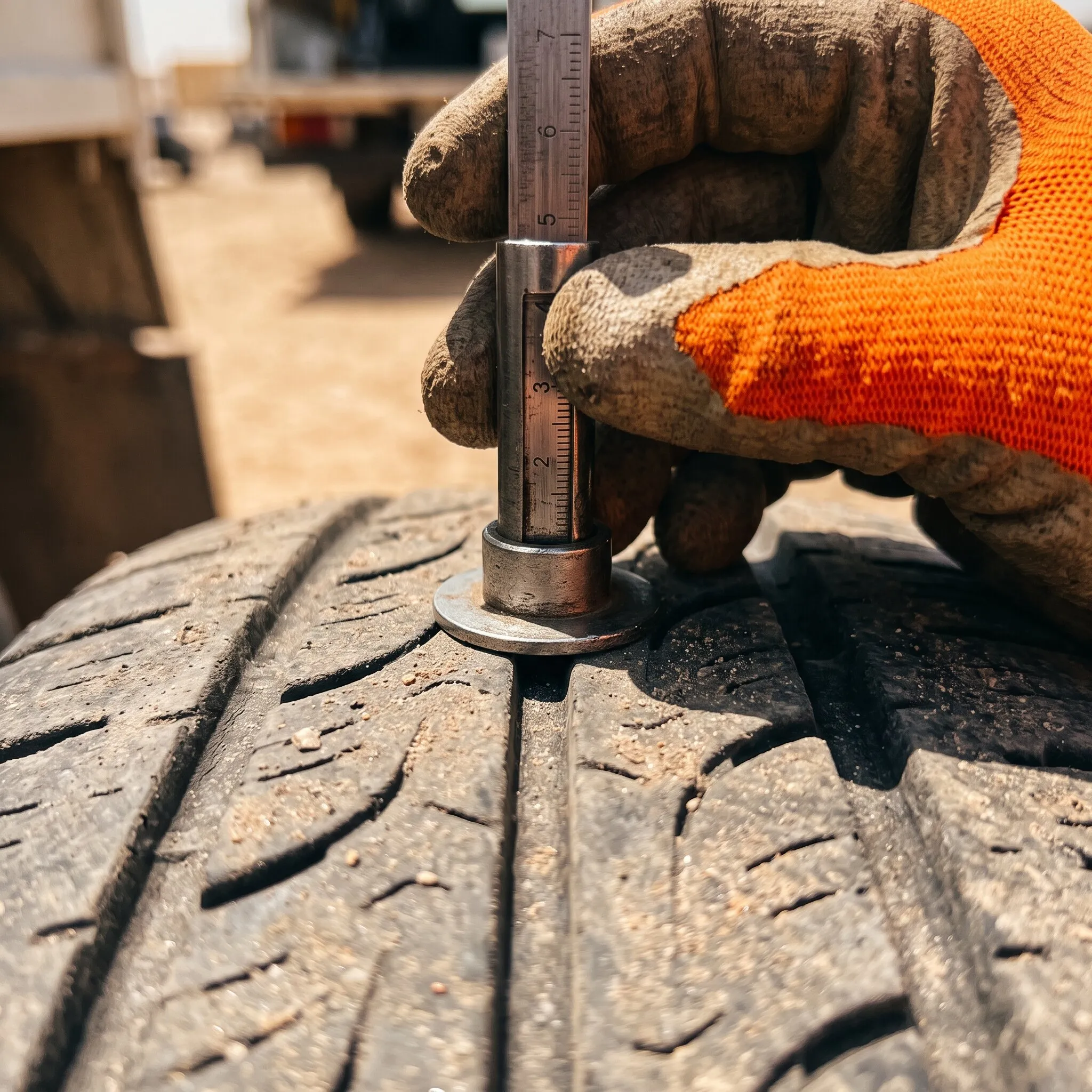
The legal minimum tread depth in the UAE is 1.6 mm, and we do not think it is worth repairing a tyre that is close to it — you would be paying to fix a tyre you will replace within weeks anyway. We measure with a gauge, at the car, and show you the number. Above roughly 3 mm a repair is good value; below that we will tell you it is time to think about replacing.
4. How old it is and how it has lived
Dubai heat is hard on rubber. Fine cracks in the sidewall, a tyre past about six years old (the date code is on the sidewall), or a tyre that has been driven noticeably flat — even once — are all reasons we may recommend replacing rather than repairing, even if the puncture itself looks repairable. Run-flat tyres that have been driven on while deflated are in the same category: most manufacturers say replace, and so do we.
Our rule: we repair when it is safe, and we say so when it is not. A repair is cheaper for you and takes us less time, so there is no incentive on our side to push a replacement — and if it is a replacement, the price is agreed before we start, with the old tyre taken away.
What about a string plug from a roadside kit?
External string plugs are a temporary fix to get you moving. They can hold for a while but they are not a permanent repair, and they can hide damage on the inside of the tyre. If you have one in a tyre, we will check it and do a proper inside repair if the tyre qualifies.